
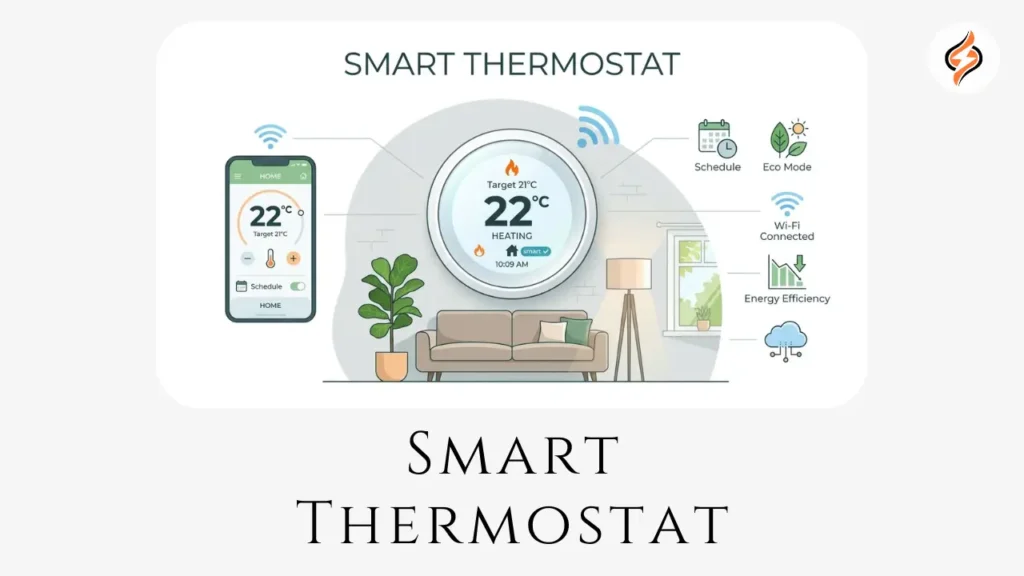
Your smart thermostat does more than control comfort. It quietly shapes your monthly utility bill.
That is the frustrating part. Many people try to save energy by switching lights off, unplugging chargers, and buying efficient appliances, yet the biggest waste often keeps running in the background. Heating and cooling are among the largest energy uses in many homes, and the U.S. Department of Energy says simply setting temperatures back for part of the day can save as much as 10% a year on heating and cooling bills. Smart thermostats exist to make that easier and more consistent.
The best models do not just let you change the temperature from your phone. They help reduce waste when you are away, simplify scheduling, and make it easier to stay comfortable without constantly touching the controls. Google says its Nest thermostats can auto-adjust when you leave and offer tools like Savings Finder, while Amazon says its Smart Thermostat is ENERGY STAR certified and cites EPA estimates of about $50 a year in average savings for ENERGY STAR certified thermostats.
After reviewing the leading options in this category, these are the five smart thermostats that stand out most in 2026 for energy savings, ease of use, and real-life value.
Our Top Picks
Best overall: Google Nest Thermostat
Best premium pick: ecobee Smart Thermostat Premium
Best budget pick: Amazon Smart Thermostat
Best for hands-off automation: Google Nest Learning Thermostat (4th gen)
Best for HVAC compatibility and straightforward scheduling: Honeywell Home T6 Pro Smart Thermostat
You May Also Read: Eco-Solvent Printer Deals Print Smarter, Print Greener [Top 5 Products Reviewed]
Why You Can Trust This Review
A thermostat is not like a decorative gadget. If you choose the wrong one, you can end up with wiring headaches, weak compatibility, or features you never use.
That is why the products here were selected based on four things that matter most to real buyers:
- energy-saving tools
- HVAC compatibility
- installation requirements
- and day-to-day usability
I also leaned on manufacturer documentation for core features and setup requirements, then cross-checked those claims against established review coverage where helpful.
You May Also Read: Dishwashing Done Right: 5+ Best Energy Efficient Dishwashers To Buy
How Smart Thermostats Actually Reduce Energy Bills
The biggest problem with old thermostats is not that they are broken. It is that they depend too much on you. You have to remember to adjust them before leaving, lower them at night, and raise them again when you wake up.
Most people do not keep that routine for long.
Smart thermostats reduce that friction.
Some use schedules.
Some use geofencing.
Some add room sensors.
Some learn your habits over time.
Google says Nest models can turn themselves down when you leave and offer energy-focused tools like Savings Finder and Seasonal Savings. Resideo says the T6 Pro can follow a 7-day schedule or respond automatically, and ecobee highlights occupancy-based comfort and built-in air-quality tools on its Premium model.
That matters because energy savings usually come from small, repeatable changes.
The Department of Energy is very clear on this point: modest temperature setbacks sustained for part of the day can reduce annual heating and cooling costs.
A smart thermostat makes those setbacks far easier to stick with.
Quick Comparison
| Thermostat | Best for | Why it stands out |
| Google Nest Thermostat | Most homes | Strong core features, easy app control, good value |
| ecobee Smart Thermostat Premium | Comfort-focused homes | Room sensor support, air-quality monitoring, premium feature set |
| Amazon Smart Thermostat | Budget buyers | Low-cost entry point, ENERGY STAR certified, Alexa-friendly |
| Google Nest Learning Thermostat (4th gen) | Set-it-and-forget-it users | Learns routines, premium design, advanced Nest ecosystem tools |
| Honeywell Home T6 Pro Smart Thermostat | Buyers who want predictable control | 7-day scheduling, geofencing, broad system support |
The right choice depends less on hype and more on how you live. Some readers want the smartest model. Others want the simplest one that still cuts waste. That difference matters.
1. Google Nest Thermostat
If you want one thermostat that makes sense for most people, start here.
The Google Nest Thermostat hits the sweet spot between price, simplicity, and real energy-saving features.
Google positions it as the more affordable Nest option and says it can auto-adjust when you are away, work through the Google Home app, and help users save with tools like Savings Finder and Energy History.
It also says this model works with 85% of systems and usually does not require a C-wire in most homes.
What makes it easy to recommend is balance. It does not try to be everything. It gives readers what they usually need most: remote control, simple scheduling, away-mode savings, and a clean setup experience.
Google says most homeowners can install a Nest thermostat themselves in about 20 to 30 minutes when following the app’s instructions.
This is the thermostat for people who want a modern upgrade without paying for every premium extra. It is especially appealing if you already use Google Home devices. The main downside is that it is not the most feature-packed model here.
If you want included room sensing or deeper premium controls, there are stronger options below.
Best for: most households that want solid savings and simple smart control.
2. ecobee Smart Thermostat Premium
The ecobee Smart Thermostat Premium is the choice for people who care about comfort as much as savings.
It is built for homes where one room always feels too warm, another feels too cold, and nobody wants to keep walking over to the wall to fix it.
ecobee says the Premium includes built-in air-quality monitoring, filter reminders, and support for SmartSensor-based comfort management, while its installation guide says installation in many homes is straightforward and typically takes about 45 minutes.
The brand also highlights this model as a top-tier energy-savings option and notes that major review outlets have rated it very highly.
This model feels more complete than most. It does not just manage temperature. It helps manage how your home feels. That difference matters if your comfort problems are room-specific rather than whole-house. It is also a strong fit for readers who already use Alexa, Apple Home, or a mixed smart-home setup.
The catch is obvious. This is a premium thermostat, and it is priced like one.
If your main goal is simply to stop wasting money, a cheaper model may be enough. But if you want better comfort control and a richer feature set, ecobee Premium is one of the strongest options on the market.
Recent review coverage still places ecobee among the best-performing smart thermostat brands.
Best for: larger homes, comfort-focused buyers, and users who want more than basic scheduling.
3. Amazon Smart Thermostat
The Amazon Smart Thermostat is the easiest recommendation for budget-conscious readers.
It solves a common problem in affiliate buying guides: many products are good, but not enough cheaper to feel compelling.
This one is different. Amazon positions it clearly as a lower-cost smart upgrade, and it still brings meaningful value because it is ENERGY STAR certified and tied into the Alexa ecosystem. Amazon also says most homes need a C-wire or power adapter for installation.
This thermostat is appealing because it lowers the barrier to entry.
If someone has been curious about smart thermostats but did not want to spend premium money, this model makes the category feel accessible.
It is also backed by a very straightforward energy-savings message. Amazon cites EPA estimates that ENERGY STAR certified thermostats save an average of $50 per year on energy bills.
The limitation is that it is not trying to beat ecobee or the premium Nest on sophistication. It is trying to give budget buyers a sensible, modern, app-connected thermostat that can help them waste less energy.
For many users, that is enough.
Best for: first-time buyers, Alexa households, and anyone trying to keep upfront cost low.
4. Google Nest Learning Thermostat (4th gen)
Some people do not want to manage schedules at all. They want the thermostat to learn, adapt, and quietly do the work in the background. That is where the Nest Learning Thermostat stands out.
Google describes the fourth-generation Nest Learning Thermostat as its smartest and most advanced thermostat yet.
Google’s support materials say Nest Learning models can learn the temperatures you like, turn themselves down when you are away, and use tools such as Seasonal Savings and Savings Finder to help reduce energy use.
The company also says the 4th gen model comes with a Nest Temperature Sensor, and its comparison guide says Nest models generally work with most common 24V systems, with the Learning model covering more systems than the standard Nest Thermostat.
This is the thermostat for readers who want the smartest possible experience with the least daily effort. It is elegant, polished, and very easy to appreciate once installed.
It is also a strong pick for people who enjoy the Google ecosystem and want their thermostat to feel less like a utility device and more like an integrated smart-home product.
The only real drawback is cost. This is not the thermostat I would push on a cautious buyer. It is for the reader who values automation, design, and premium experience enough to pay more for them.
Best for: hands-off users who want advanced automation and a premium Nest experience.
5. Honeywell Home T6 Pro Smart Thermostat
Not every buyer wants a thermostat that feels flashy. Some want one that feels dependable.
That is exactly where the Honeywell Home T6 Pro Smart Thermostat makes sense. Resideo says the T6 Pro is ENERGY STAR certified, supports app control, can run on a 7-day schedule, and also uses geofencing to respond automatically. It is designed to work with the heating stages of existing systems, and the installation literature notes that 24 VAC power with a C-wire is required.
This model is easy to like because it feels practical. It does not lean as heavily on the “smart lifestyle” angle as Nest or ecobee. Instead, it focuses on predictable scheduling, strong HVAC compatibility, and reliable remote access. That makes it especially appealing for homeowners who care more about stable performance than about premium screens or extra smart-home bells and whistles.
The downside is that it feels more functional than exciting. But that is also part of the appeal. In many homes, boring and dependable is exactly what you want.
Best for: users who want reliable scheduling, geofencing, and broad HVAC support.
You May Also Read: Bluetti vs Jackery: A Comprehensive Global Comparison of Portable Power Stations
What to Check Before You Buy
The biggest mistake readers make is choosing a thermostat based only on brand. Compatibility matters just as much as features.
First, check your HVAC system. Google says Nest thermostats are designed for most 24V systems, and the Google Home app can walk buyers through a compatibility check before installation. Resideo and Amazon also stress checking compatibility up front, especially where C-wire requirements are concerned.
Second, think honestly about how you live. If you like control and routine, a model like the Honeywell T6 Pro may suit you better.
Whereas, if you want the thermostat to make more decisions on its own, Nest Learning is stronger. If uneven room temperatures drive you crazy, ecobee Premium makes a stronger case than the rest because of its comfort-focused ecosystem.
Third, do not ignore installation. Google says many Nest installations are DIY-friendly and can take about 20 to 30 minutes, while ecobee says many installations take around 45 minutes. Amazon and Resideo both make it clear that wiring and power requirements can make or break the experience.
Are Smart Thermostats Actually Worth It?
For many households, yes.
The reason is simple. The savings case is real, but the convenience case is just as powerful.
The Department of Energy says temperature setbacks can reduce heating and cooling costs.
The problem is that people rarely keep up with those adjustments manually. A good smart thermostat closes the gap between what people mean to do and what actually happens every day.
There is also a comfort benefit that buyers often underestimate. A good thermostat reduces the little daily annoyances that make a home feel wasteful. You stop cooling an empty house. You stop waking up too warm. You stop returning to a stale, uncomfortable room and wondering why your bill is still high.
That is why smart thermostats keep growing in appeal. They are not magic. They simply make better habits easier.
You May Also Read: Eco-Friendly Technologies for Sustainable Living
Final verdict
If you want the best mix of value, features, and energy-saving potential, the Google Nest Thermostat is the strongest all-around pick.
If comfort is your top priority and you want a richer feature set, go with the ecobee Smart Thermostat Premium.
If price matters most, the Amazon Smart Thermostat is the budget choice that still makes practical sense.
If you want your thermostat to think more and ask less from you, the Google Nest Learning Thermostat (4th gen) is the premium automation pick.
And if you want dependable scheduling with broad HVAC credibility, the Honeywell Home T6 Pro Smart Thermostat remains a very solid choice.
In the end, the best thermostat is not the one with the longest feature list. It is the one that fits your home, your habits, and your patience. Choose that well, and the savings tend to follow.
FAQ
Q. Do smart thermostats really save money?
They can. The U.S. Department of Energy says setting temperatures back for part of the day can save as much as 10% a year on heating and cooling bills, and smart thermostats help automate that behavior. Amazon also cites EPA estimates of about $50 a year in average savings for ENERGY STAR certified thermostats.
Q. Do all smart thermostats need a C-wire?
No. Google says the standard Nest Thermostat usually does not require a C-wire in most homes, while Amazon’s Smart Thermostat and Honeywell’s T6 Pro generally require C-wire power or an appropriate setup. Always run the compatibility check before buying.
Q. Which smart thermostat is best for beginners?
The Google Nest Thermostat and Amazon Smart Thermostat are the easiest starting points for most buyers because they keep setup and day-to-day use relatively simple. Google also says most homeowners can install Nest themselves in about 20 to 30 minutes.
Q. Which smart thermostat is best for uneven temperatures between rooms?
The ecobee Smart Thermostat Premium is the strongest option in this group for that problem because ecobee emphasizes room-based comfort tools and sensor support.
Q. Is a smart thermostat worth it if I already have a programmable thermostat?
It can be, especially if you do not consistently use the programming features you already have. Smart thermostats reduce the work required to keep an efficient schedule and often add away detection, app control, and better energy insight.
I can next turn this into a fully polished WordPress-ready version with a meta description, excerpt, table block, and affiliate callout boxes.