
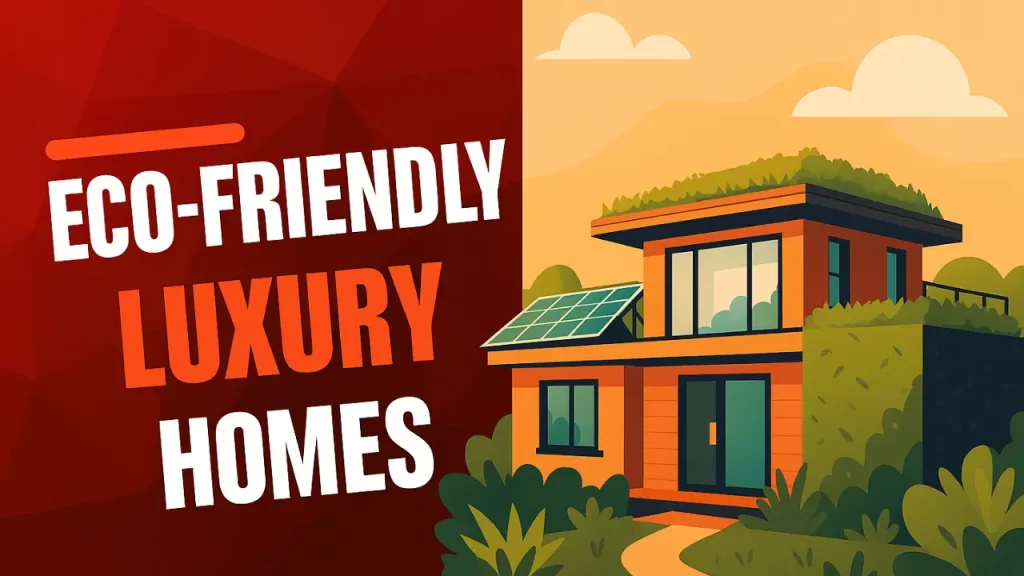
Luxury today isn’t about gold taps or giant chandeliers. It’s about comfort, health, and harmony with nature. If you’re thinking of building your dream home, one that is both indulgent and eco-conscious, this guide is for you.
We’ll walk you through every step—from picking the right land to getting certified. Along the way, you’ll get real tips backed by verified data and trends shaping high-end real estate across the US, UK, Europe, Canada, and Australia.
Let’s get started.
Why Eco-Friendly and Luxury Go Hand in Hand
A decade ago, “eco” and “luxury” felt like opposites. Not anymore.
Modern luxury is deeply tied to well-being, smart living, and sustainability. High-end buyers no longer just ask how big or stylish a home is—they want to know how it performs.
Is it energy-efficient?
Is the air clean?
Does it save water?
Does it feel good to live in?
Here’s why this matters:
- In 2024, 63% of luxury homebuyers in North America said they would pay more for green features.
- LEED-certified homes in the US sell for an average of 8% more than similar non-certified homes.
- In Australia, over 30% of homes have solar panels—luxury builds are leading the way.
- The EU now requires all new homes to meet nearly zero-energy standards.
So if you want your home to be future-ready, eco-friendly design isn’t optional—it’s essential.
You May Also Read: Climate-Responsive Homes: Building for a Sustainable Future
Step 1: Choose the Right Location
Building green starts before a single brick is laid. It starts with land.
What to look for:
- Minimal disruption. Avoid clearing forests or wetlands. Choose previously developed or lightly used sites.
- Sun exposure. A south-facing plot will capture the most sunlight—ideal for solar power and natural warmth.
- Wind flow and shade. Natural breezes can help with cooling. Trees offer shade and privacy.
- Views and greenspace. Beautiful surroundings add to both resale value and your everyday joy.
Pro tip: Homes that are aligned with their environment don’t just use less energy—they feel better to live in.
Step 2: Hire a Green Architect and Builder
Not all architects or builders understand sustainable luxury. Many homes look green on the outside but fail to deliver real performance.
Here’s how to find the right team:
- Look for experience. Ask about eco-luxury projects they’ve completed.
- Check certifications. Seek LEED AP, WELL Accredited Professional, Passive House Consultant, or similar.
- Ask for proof. Photos, case studies, energy data—don’t just take their word for it.
A good team will guide you through sustainable choices that enhance—not limit—design and function.
And remember: working with professionals familiar with local green building codes and incentives can also save you money.
Step 3: Design for Passive Efficiency
Here’s a secret: the most sustainable homes aren’t the ones with the biggest solar systems. They’re the ones that use the least energy to begin with.
That’s the idea behind passive design.
What it includes:
- Super insulation. Thick walls, triple-glazed windows, and airtight construction mean you barely need heating or cooling.
- Solar orientation. Big south-facing windows soak up winter sun. Roof overhangs block summer heat.
- Natural ventilation. Use window placement, cross breezes, and stack ventilation to cool without AC.
- Thermal mass. Concrete, brick, or stone can store heat and release it slowly—keeping things stable inside.
- Efficient layout. Group rooms to reduce energy waste. Place high-use rooms in sunny spots.
Homes built to Passive House standards can reduce heating and cooling needs by up to 90%. That’s real performance you can feel.
And yes—it can be done beautifully.
Step 4: Use Sustainable and High-End Materials
You don’t have to choose between luxury and sustainability. In fact, the greenest materials often look and feel the best.
Here’s what to include:
- Reclaimed wood. Adds character and reduces deforestation. Perfect for floors, ceilings, or feature walls.
- Recycled metal. Steel or aluminum roofing made from recycled materials is durable and sleek.
- FSC-certified timber. Ensures wood is harvested responsibly.
- Bamboo and cork. Renewable and beautiful—ideal for flooring, cabinetry, and even walls.
- Low-VOC paints and finishes. Keeps your indoor air clean and safe.
- Natural insulation. Sheep wool, hemp, or cellulose are eco-friendly and high-performing.
- Recycled stone and terrazzo. Stylish, durable, and low impact.
Even your countertops, tiles, and fabrics can be sustainable. It’s all about making thoughtful choices that reflect your values.
And yes, they absolutely can feel—and look—luxurious.
Step 5: Integrate Smart & Green Technologies
This is where sustainability gets high-tech.
Green tech not only saves energy—it adds comfort, control, and peace of mind.
Must-haves for your eco-luxury home:
- Solar panels. Power your home with clean energy. You can even opt for solar tiles for a seamless look.
- Battery storage. Store excess energy for use at night or during outages. (Think Tesla Powerwall.)
- Smart HVAC. Heat pumps use 3–5x less energy than gas. Smart thermostats optimize comfort room by room.
- LED lighting. Long-lasting, low-energy, and available in luxury-grade fixtures.
- Automated shading. Adjusts blinds based on time of day or sun angle.
- Rainwater harvesting. Collect rain for gardens or flushing toilets.
- Low-flow fixtures. Modern faucets and showers that feel great but use much less water.
- EV charging. A must if you own a Tesla or Porsche Taycan. Install Level 2 chargers now to future-proof.
Bonus: many of these tech features qualify for tax credits or rebates in the US, UK, Canada, and EU.
You May Also Read: Silonn Countertop Ice Maker Review: My Honest Opinion After 3 Months of Use
Step 6: Landscape for the Planet
Your yard can be as sustainable as your house—and just as stunning.
Ideas for climate-smart landscaping:
- Native plants. They thrive without pesticides or extra water.
- Drought-tolerant design. Use gravel paths, succulents, and hardscapes to reduce irrigation.
- Permeable paving. Allows rain to soak into the ground, reducing runoff.
- Green roofs and living walls. Cool your home and clean the air.
- Edible gardens. Fresh herbs, vegetables, even fruit trees—all grown steps from your kitchen.
- Smart irrigation. Sensors water only when needed.
You May Also Read: Climate-Smart Agriculture: Building Resilience for a Changing World
Some luxury estates even add pollinator gardens, natural pools, or on-site composting systems to close the loop.
You May Also Read: How Sustainable Is Clay Pots? A Quick Eco Guide
Your landscape should reflect your home’s values—and connect you with the earth every day.
Step 7: Get Certified and Future-Proof It
Want to make sure your home is truly sustainable—not just in looks but in performance? Get it certified.
Top certifications to aim for:
- LEED (US/global): Covers energy, water, materials, and indoor health.
- Passive House (global): Ultra-efficient, airtight design. Great for comfort and bills.
- WELL (global): Focuses on health, air, light, and wellness.
- Living Building Challenge (US/global): The gold standard for regenerative design. Hard to get, but incredibly powerful.
You May Also Read: 7 Top MUST HAVE Sustainable Outdoor Accessories
Why certification matters:
- Verified performance. You know your home meets real standards.
- Healthier living. Certified homes have cleaner air, better lighting, and fewer toxins.
- Higher resale value. Green homes are selling faster and for more across luxury markets.
- Policy compliance. Many countries now require energy-efficiency standards in new builds. Certification keeps you ahead.
Also think long term. Design your home to allow for:
- Tech upgrades (like future EV needs)
- Modular additions
- Smart home integrations
Your home should grow with you—and with the times.
Final Thoughts: Eco-Friendly Luxury Homes
Let’s be clear. You don’t need to give up luxury to live sustainably.
You can have a spacious, sun-filled villa with a green roof, enjoy a sleek kitchen powered by the sun, relax in a spa bathroom that uses half the water of a standard one.
This is what sustainable luxury looks like today.
And it’s not just about comfort—it’s about values. About building a home that supports your health, honors the planet, and leaves a legacy you can be proud of.
The world is changing. Our homes should too.
Want to Start Your Project?
We’ve created a free Eco-Luxury Home Checklist—with materials, certifications, and tech options to consider.
Download it now or sign up for our newsletter to get exclusive green design tips, case studies, and updates on sustainable real estate trends.
Build boldly. Live beautifully. Do it sustainably.