
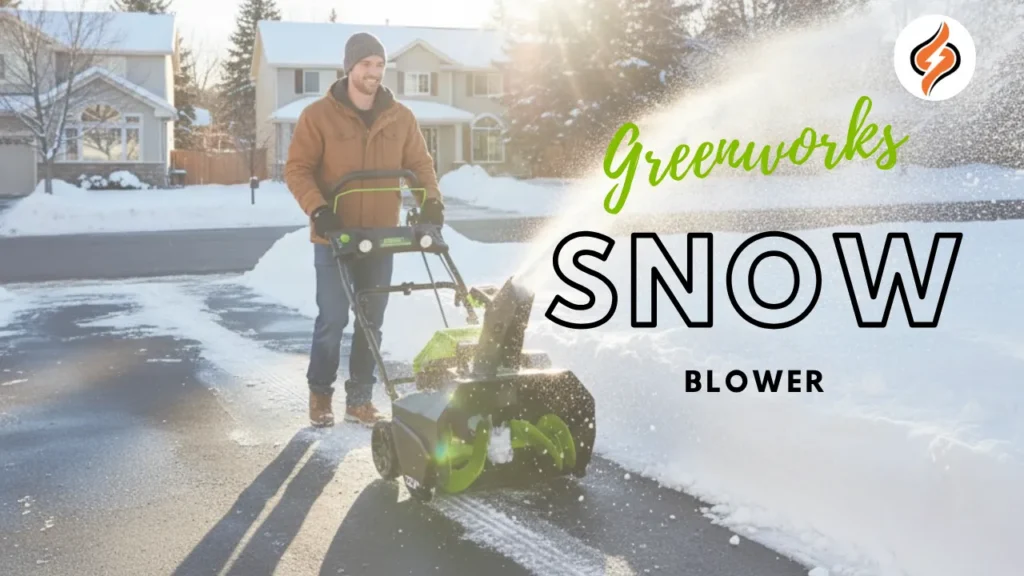
Have you ever gone out early on a frosty morning to find your driveway buried in snow and wished it could be easier? Instead of fighting a roaring gas engine and icy pull-cord, imagine pushing one button and watching the snow fly away. That’s exactly what the Greenworks Snow Blowers are designed for.
These machines change how homeowners tackle snow. They operate quietly, produce no fumes, and deliver strong performance. It almost feels like cheating—but behind it sits serious engineering, made for easier and greener snow removal.
In this guide, we’ll pull back the curtain on Greenworks snow blowers: what features they offer, how different models stack up, what they perform like in real life, and which one might be right for you.
Whether you live in a city home or have a long driveway in a snowy region, by the end you’ll be ready to clear snow with a smile.
Let’s dive in.
Why Go Green? The Benefits of a Greenworks Snow Blowers
Choosing a battery-powered model isn’t just a “nice to have”—it brings real advantages.
Here’s what you gain when you switch to a Greenworks unit.
a. Eco-Friendly Operation
One of the biggest draws of Greenworks snow blowers is their all-electric design.
There’s no gasoline or oil to mess with, which means zero direct emissions and no exhaust smell while you work.
You’re clearing snow without contributing to air pollution from a gas engine.
Since they run on electricity, if your home uses renewables, your snow-clearing becomes even greener.
You May Also Explore: Greenworks Leaf Blower 40V Review: Is It Worth It?
b. Quiet and Neighbor-Friendly
Have you ever been jolted awake by a gas snow blower at 5 a.m.? With a Greenworks model, that’s much less likely.
For example, some units run around 71 dB at the user’s position—similar to a conversation or a passing car. In contrast, many gas engines exceed 85–90 dB.
That makes a big difference. You can clear before sunrise or after dusk without upsetting your neighbours or your own ears.
You May Also Read: Greenworks 60V Cordless Leaf Blower Review: Power, Performance, and Portability
c. Less Maintenance, Easy Start
No spark plugs, no air filters, no oil changes. With a Greenworks blower you don’t have to winterize a fuel tank or drain stale gas.
Starting is simple: charge the battery, install it, press a button. No rope-pulling in freezing weather and praying the engine fires. If you’re already comfortable with a cordless drill, you’ll handle this with ease.
d. Lightweight Maneuverability
Without a heavy gas engine and full tank of fuel, many Greenworks single-stage machines weigh around 30-40 lbs (≈13-18 kg). In contrast, comparable gas models can easily weigh 60-100 lbs or more.
That lighter weight, combined with features like self-propelled drive on some models, means you can push and steer more easily—even in tight driveways or on winding paths. If you’ve ever wrestled a bulky two-stage gas blower, you’ll appreciate the nimbleness of an electric model.
You May Also Read: Greenworks 80V 21 Cordless Lawn Mower: A Comprehensive Review
d. Cost Savings Over Time
While the upfront cost of a high-end battery snow blower may be similar to gas versions, you often save money in the long run. No gasoline to buy each winter. No oil, spark plugs, carburetor issues.
Electric “fuel” is just your household power use, which tends to be far cheaper. Battery packs do wear eventually, but Greenworks designs them for dozens/hundreds of recharge cycles and backs them with warranties. If you use the tool for many winters, the savings add up.
e. Brand Battery Ecosystem
If you already own other Greenworks yard tools (mowers, leaf blowers, chainsaws), you may already have compatible batteries. For example, Greenworks’ 40 V line powers 75+ tools across their ecosystem.
This means you’re not buying a “single-use” tool; you’re buying into a battery platform. It adds flexibility and value.
In summary: choosing a Greenworks snow blower gets you a cleaner, quieter machine that’s easier to use and maintain.
It aligns with a greener lifestyle, saves you money over time, and fits into a broader battery-powered toolkit. It turns a usually arduous winter chore into something considerably more pleasant—all while doing a small good deed for the environment (and your ears!).
You May Also Read: GreenWorks Pressure Washer Review | The Ultimate Buyer’s Guide to the Best Models
Greenworks Snow Blowers Lineup – Finding the Right Model
Greenworks offers a wide range of models. Below, we’ll explore the main categories so you can match your needs to the proper machine.
– 40 V Single-Stage Models
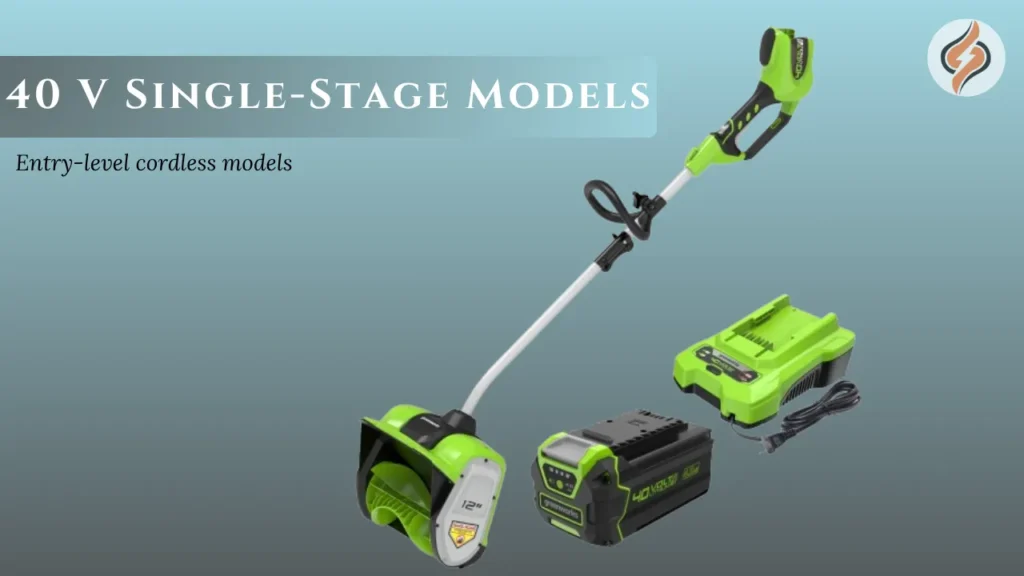
These are entry-level cordless models. They’re great for light to moderate snowfall and smaller areas—sidewalks, decks, small driveways. For example, their 40 V 20-inch model clears a 20-inch path and can handle up to about 10–12 inches of snow.
They use one 40 V battery and are lightweight and easy to manage. If your area doesn’t get heavy storms, one of these could be your perfect match.
– 60 V Single-Stage Models
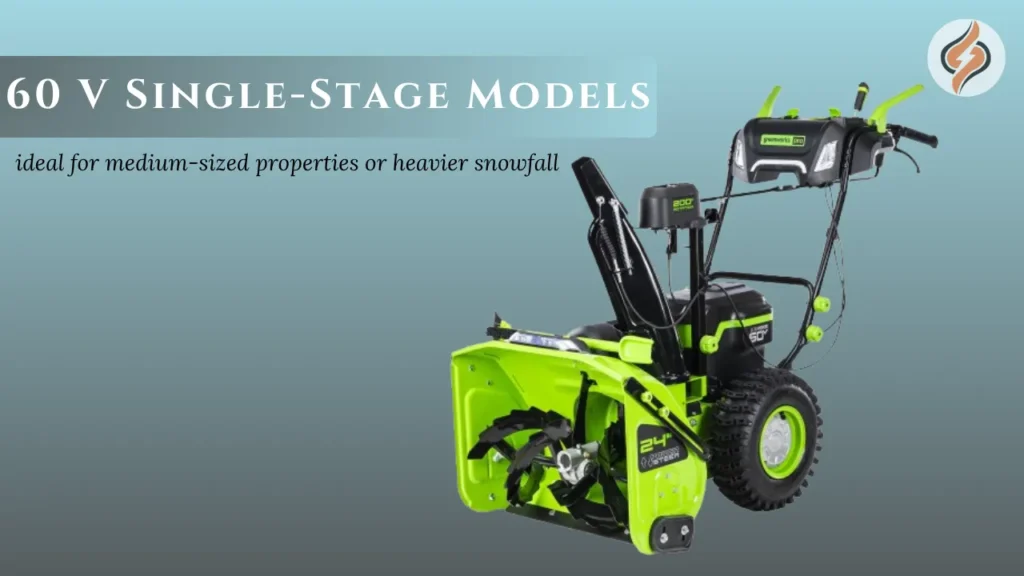
Stepping up a notch, the 60 V line offers more power and often a wider clearing width. For example, a 22-inch single-stage in this category is rated to handle around 12–13 inches of snow.
Some models include dual battery ports. You insert two batteries and when one dies the second kicks in—effectively doubling runtime without interruption. These are ideal for medium-sized properties or heavier snowfall.
– 80 V (and higher) Single-Stage Models
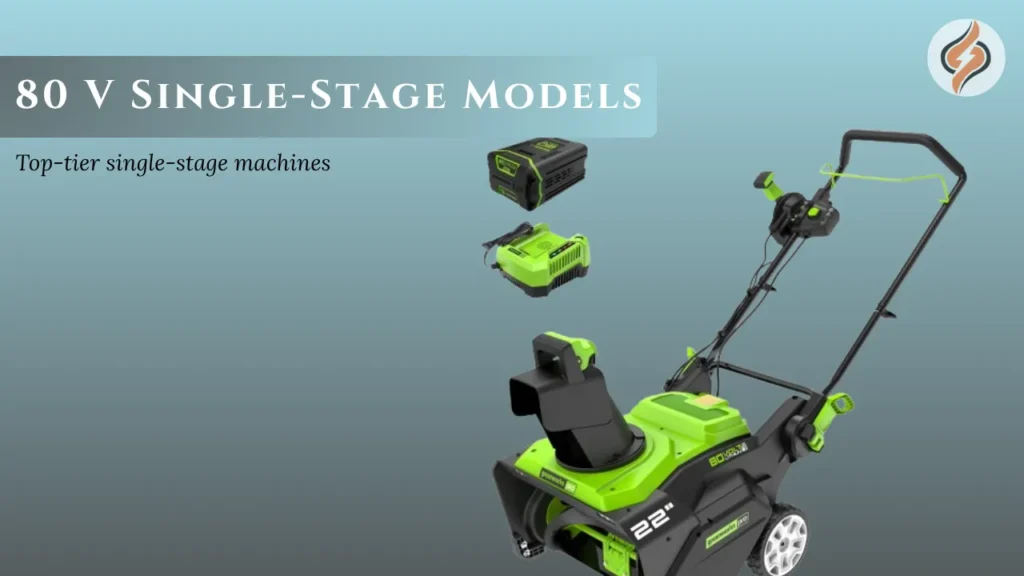
These are top-tier single-stage machines. For instance, the 80 V 22-inch single-stage offers clearance of heavy snow and large areas. One spec sheet quotes clearing a 6-car driveway on one charge of a 4.0Ah battery.
They include features like LED lights, metal parts, and exceptional throwing distance. If you need serious performance but still want the simplicity of single-stage, this is it.
– Corded Electric Option
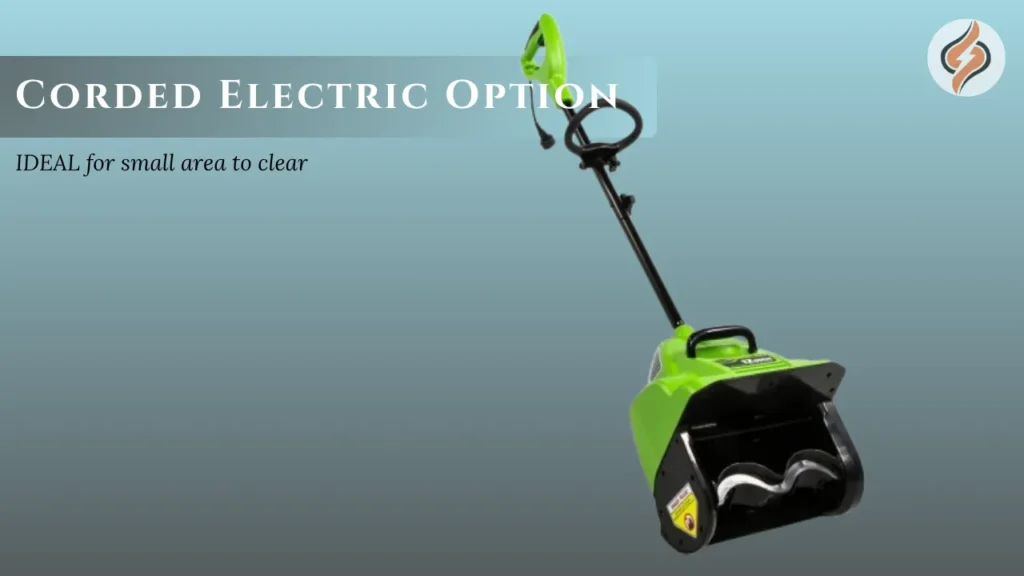
If you have a small area to clear (short walkway, porch, single-car driveway) and near a power outlet, then a corded model is worth considering.
In this case, the Greenworks 13 Amp Corded 20″ Snow Thrower is a budget-friendly option with unlimited runtime (as long as your extension cord and power source are sufficient). You’ll be tethered to a cord, but you avoid buying batteries and charging.
Tip: The key is matching your typical snow conditions and driveway size to the model. Do you get light flakes or heavy dumps? Is your area small or large? The simpler the scenario, the lower the model you need. Regardless, all Greenworks models offer the core benefits of being quiet, clean and easy to start.
Performance on the Ground – What to Expect
Specs are useful, but how do these snow blowers perform in real life? Let’s break down practical results.
#1 Clearing Width & Depth
Many single-stage machines offer clearing widths of 20–22 inches per pass. Two-stage models go up to 24 inches or more.
- Clearing depth—how much snow you can take in one pass—varies. Single-stage might handle 8–12 inches; two-stage models can manage 14–18 inches deep.
- Throwing distance is important so you’re not just dumping snow a few feet away. Good models throw 20–30 feet; heavyweight machines push much farther.
- On paved surfaces, many users say these machines can clear right down to pavement, thanks to rubber-tipped augers (in single-stage models). On gravel drives you’ll want to avoid single-stage units because they might pick up and throw rocks.
#2 Battery Life & Runtime
Battery life depends on snow type, depth, how hard you push the machine. Here are rough guidelines:
- Light, fluffy snow = longer runtime because less resistance.
- Heavy, wet, or compacted snow = shorter runtime; the machine works harder.
For example, a 40 V 4.0Ah battery in one case lasted about 21 minutes in heavy Utah snow—less than the ideal 45 minutes listed.
Other models claim much larger coverage: one 22-inch 60 V model could clear two-thirds of an acre on a full charge.
For most average driveways, Greenworks includes enough battery capacity. But if you have a very long driveway or large property, plan to either invest in extra batteries or choose a higher-voltage model.
You May Also Explore: Is the Greenworks 80V Hedge Trimmer the Right Choice for You? Read This Before You Buy!
#3 Real-World Clearing Performance
Many homeowners transitioning from gas are impressed. They report these battery models handling normal snowfalls (3–8 inches) with ease and even managing heavier snow by going a bit slower.
Some caveats: single-stage units (electric or gas) can struggle with icy chunks, plow ridges or very heavy wet snow. That’s where the two-stage models shine.
Tip: For plow piles or deep snow, clear in layers rather than waiting for a huge accumulation. It’s easier on the machine and the battery.
#4 Maneuverability & Handling
Electric models have a design advantage: lightweight, fewer vibrations, easy start. Many include self-propelled drive and power-steering (especially the two-stage ones) making them much easier to steer and push.
Features such as LED headlights help with early morning or dusk clearing. Chute rotation levers let you easily aim where the snow goes. Overall, user experience tends to be more pleasant than many older gas machines.
Addressing Common Concerns (Power, Battery & Cold Weather)
It’s natural to have questions about switching to a battery-powered model. Here are answers to the most common concerns.
“Will it have enough power for heavy snow and ice?”
Short answer: Yes—for most situations. Especially if you choose the right model. The higher-voltage models (60 V & 80 V), especially in two-stage form, have power comparable to decent gas engines. For example, Greenworks claims a 60 V two-stage unit delivers “equivalent power of a 253 cc gas engine (about 9 HP)”.
If you have extremely heavy snow (18+ inches regularly, heavy wet snow) you may need to clear in stages or choose the most powerful model. A two-stage unit makes sense in that scenario.
“What if the battery dies before I’m done?”
The solution: extra batteries + smart work strategy.
- Many kits come with dual battery ports or include two batteries.
- You can rotate: one in use, one charging.
- Clear the most important paths first (walkway, driveway strip) so if you run low, essentials are done.
- For large areas, buying a higher-amp battery (5Ah, 8Ah) makes sense.
“How does cold weather affect battery performance?”
Cold lithium-ion batteries may drop in output if stored cold. Greenworks advises storing/charging at room temperature.
Practical tip: keep batteries inside until you’re ready to use. If battery is very cold, give it a few minutes to warm up before use.
Yes, they work in winter—but with a little planning, you get best results.
“Is the build durable enough (plastic vs metal)?”
Some worry that electric models with many plastic parts might lack durability. Greenworks uses high-impact plastics and rubber‐tipped augers on many units. According to product specs, many single-stage units use polymer housings and plastic augers; two-stage models incorporate more metal.
Users report that after multiple winters, scuffs appear but no cracks. Plus, many models come with 3- or 4-year tool warranties. That shows confidence.
“What about really deep or end-of-driveway plow piles?”
The big end-of-driveway ridge left by a municipal plow is often the toughest job. A single-stage blower might struggle with a 2-foot wall of icy snow. Strategy: bust the pile into shorter chunks using a shovel or by taking shallow passes, then the blower handles the rest. If you face this often, a two-stage model is the smarter investment.
You May Also Read: Economic Impact of Sustainable Agriculture
Tips for Using and Maintaining Your Greenworks Snow Blower
To keep your machine in top shape and get the best experience, follow these practical tips:
a. Charge & Store Batteries Properly
- Charge indoors in a dry, moderate-temperature area.
- Avoid charging in extreme cold or heat.
- After use, bring battery inside; don’t leave it in a freezing garage.
- For long‐term storage: store battery at ~40-60% charge in a cool indoor spot.
b. Keep the Chute Clear (Use the Tool!)
- If chute becomes clogged (especially with wet snow), turn off machine and wait until moving parts stop. Then clear with a broom handle or the clearing tool—not your hand.
- If you often get slushy snow, consider lightly spraying the chute with cooking spray or silicone lubricant to help snow slide off.
c. Plan Your Cord (if using Corded model)
- For the corded option: start near the outlet and move outward, letting the cord trail behind you.
- Use a cold-weather rated heavy extension cord (12 or 14 gauge).
- Be mindful of the cord; avoid running over it while clearing.
d. Use Lights & Speed Control Wisely
- If your model has LED headlights or speed settings: use them.
- Slow down in heavier snow to let the machine work steadily.
- A lighter pace gives a cleaner clear and reduces strain.
e. After Each Use – Quick Clean & Check
- Brush off excess snow or ice from the machine.
- Remove battery, wipe any moisture off, store battery indoors.
- Check the auger area for debris.
- If your machine has a scraper bar or skid shoes (common on two-stage models), inspect for wear; replace if necessary.
f. Off-Season Storage
- When winter is done: clean the machine thoroughly, remove salt, dry it and store in a dry place.
- No fuel means no fuel-gumming issues—one less headache.
- Remove battery and store indoors at moderate temp.
- Before next season: inspect bolts, tighten if needed, maybe apply soft lubricant to moving parts.
g. Know Your Snow & Plan Ahead
- Fresh snow is easier to clear than snow that’s been walked on, driven on, or partially melted and refrozen.
- If a big storm is coming, consider clearing mid-storm and then again after, instead of letting everything accumulate.
- For deep drifts: remove in layers rather than waiting for everything at once.
By following these tips you’ll get the best from your Greenworks snow blowers and extend its life. It sounds like a few extra tasks, but once they become routine, they’re quick and pay off big‐time.
Final Thoughts – Greenworks Snow Blowers
A Greenworks snow blower can truly transform your winter experience. After exploring the models, capabilities, real-life performance, and care tips, one thing is clear: battery-powered Greenworks snow blowers are no longer just a novelty—they’re a practical solution.
Imagine no longer dreading the early-morning dig-out. Instead, you roll out a quiet, easy-to-handle machine that gets the job done while you breathe easy (literally—no exhaust fumes). It’s a modern upgrade to a cold-weather chore.
Of course, no tool is perfect for every scenario. The key is matching your needs to the machine. Select based on how much snow you get, how big the area is, and how often you clear. Whether it’s a nimble 40 V for light work or a powerful 80 V two-stage machine for heavy snow—Greenworks likely has a fit. And with the right maintenance, you’ll avoid surprises and get many winters of reliable service.
If you’re hesitating—wondering if battery really can match gas—the evidence says yes. Users are impressed by how capable these machines have become. Meanwhile, you’re writing a quieter, cleaner chapter in your neighbourhood. That’s something to feel good about.
So, what’s next? If you’re ready: assess your typical snowfall, measure your clearing area, and check out the model that fits best. Maybe it’s the corded unit for a short walkway; maybe the 24-inch two-stage for a long, suburban driveway. Whatever it is, when you invest in the right machine—and take care of it—you’ll enjoy clearer driveways, lighter workload, and a cleaner conscience.
Here’s to clearer paths, a warmer winter routine, and a greener way to remove snow. With the right tool in hand, even the fiercest snowstorm can be met with confidence.
Let’s make sustainability a daily choice.
You May Also Read: 7 Top MUST HAVE Sustainable Outdoor Accessories















I enjoy you because of your own work on this web site. My mum takes pleasure in making time for internet research and it is easy to understand why. My spouse and i know all regarding the powerful mode you offer rewarding thoughts through this web blog and therefore invigorate contribution from the others on this concept plus our favorite daughter is now learning a whole lot. Take pleasure in the rest of the new year. You’re the one performing a good job.