
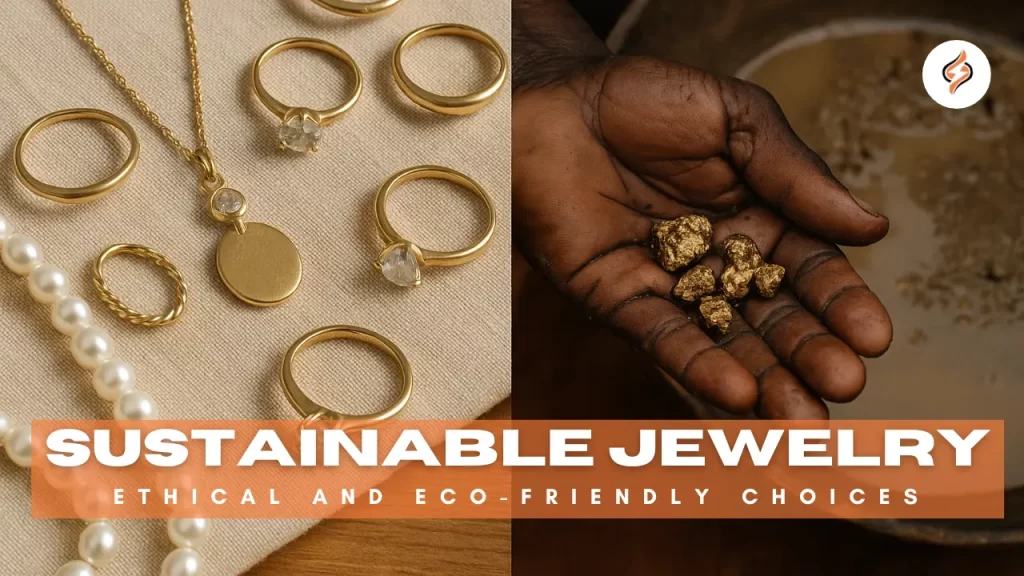
Jewelry is timeless. It marks love, milestones, and self-expression. But behind the sparkle lies a darker story of environmental damage, unfair labor, and hidden supply chains. That’s where sustainable jewelry comes in.
This guide will give you everything you need to know—what “sustainable” really means, which materials are better, how to avoid greenwashing, and how to find brands you can trust. By the end, you’ll know how to shop smart, with confidence and conscience.
Why Sustainable Jewelry Matters: High Costs Hidden in the Sparkle
Before we can fully embrace sustainable jewelry, we need to unpack the true cost of conventional practices—socially, environmentally, and ethically.
1. Environmental Devastation: The Hidden Toll of Gold Mining
- Toxic waste. Producing just one gold wedding ring generates about 20 tons of mine waste, contaminated with hazardous chemicals like mercury and cyanide that pollute ecosystems and drinking water.
- Mercury pollution. Artisanal and small-scale gold mining accounts for 37% of global mercury pollution, enough to endanger ecosystems and communities across continents.
- Deforestation. In the Amazon and other tropical forests, gold mining drives significant deforestation. From 2001 to 2013, a staggering 1,680 km²—roughly the size of a small country—was lost to mining alone.
- River destruction. In Brazil’s Tapajós region, illegal mining sediments—up to 7 million tonnes per year—are dumped, turning once-clear rivers muddy and lifeless.
- Cyanide disasters. The gold cyanidation process, common in refining, has caused major disasters.
2. Human and Social Costs: Exploitation & Health Risks
- Widespread involvement. Between 10 and 15 million artisanal gold miners operate globally, including millions of women and children, often in dangerous, unregulated environments.
- Toxic exposure. In Senegal, mercury levels near mining communities were found to exceed safety limits by up to 100 times—especially affecting women and children involved in the mining process.
- Safety hazards. Mining accidents, including cave-ins and chemical exposure, are common. In Ghana, mining-related fatalities surged 600% in one year, highlighting the sector’s precarious nature.
3. Carbon Footprint: Jewelry’s Outsize Environmental Impact
- Mining dominates emissions. Roughly 95% of the carbon emissions associated with jewelry come from mining and metal production. Only 5% comes from design, production, and transport.
- Mining’s footprint beyond jewelry. The broader mining sector contributes between 4% and 7% of global greenhouse gas emissions, underscoring how extraction—especially for precious metals—plays a major role in climate change.
4. Waste Culture: Fast Fashion for Your Fingers
- Plated jewelry fails fast. Many fast-fashion pieces are cheaply plated, tarnish or fade quickly, and often get discarded—fueling a vicious cycle of consumption and waste. Though harder to quantify, the environmental cost is real and cumulative.
You May Also Read: Is Hot Topic Fast Fashion?
Why All This Matters to You
The traditional jewelry industry isn’t just about aesthetics—it’s a resource-intensive, pollution-heavy, and often exploitative system.
When the sparkle comes at such a price, it’s not just jewelry—it’s a reflection of deeper choices.
That’s why sustainable jewelry matters: real materials, ethical labor, transparency, and a system that values long-term beauty over short-term gains.
You May Also Read: Is Commense Fast Fashion? An In-Depth Investigation
What Does “Sustainable Jewelry” Actually Mean?
The word “sustainable” is everywhere, but its meaning shifts depending on who uses it. In jewelry, it generally refers to:
- Materials: Metals and stones that are recycled, fairly mined, or lab-grown.
- Labor ethics: Fair pay, safe conditions, and respect for local communities.
- Longevity: Pieces designed to last decades, not months.
- Circularity: Systems for resale, repair, or recycling.
- Transparency: Brands backing claims with audits, certifications, and reports.
Important: A brand calling itself “conflict-free” does not automatically mean it is sustainable. Conflict-free diamonds, for example, may still involve harmful mining and unfair wages.
You May Also Read: 9 Best Thrift Stores in Houston: Hidden Treasures Await
Who Benefits Most from Sustainable Jewelry?
Sustainable jewelry isn’t just for one type of shopper—it offers something valuable for everyone.
- If you’re eco-conscious, it gives you peace of mind. You know your choices come with proof, transparency, and a lower impact on the planet.
- If you’re planning an engagement, it helps you balance sparkle, ethics, and budget. You don’t have to choose between beauty and responsibility.
- If you love fashion, it means investing in durable styles instead of throwaway trends. These are pieces that stay part of your wardrobe for years.
- If you have sensitive skin, hypoallergenic metals like titanium, platinum, or higher-karat gold keep you safe and comfortable.
- If you’re buying a gift, sustainable jewelry ensures that what you give carries a meaningful story, not just a pretty box.
- If you appreciate luxury, it delivers artistry with traceability and long-term value—beauty you can feel proud to own.
Wherever you are in your journey—whether it’s a once-in-a-lifetime ring or an everyday necklace—sustainable jewelry aligns beauty with values.
You May Also Read: Is Ralph Lauren Fast Fashion? Ralph Lauren’s Business Model Investigated!
Sustainable Materials: A Buyer’s Guide
Metals
- Solid Gold (14k/18k): Best for durability. Look for recycled or Fair-mined sources.
- Recycled Gold/Silver: Prevents new mining but doesn’t address labor conditions. Still valuable for reducing waste.
- Fairmined / Fairtrade Gold: Supports small-scale miners under strict standards. Higher cost but strong ethical impact.
- Gold-filled: Affordable, durable for everyday wear.
- Vermeil: Thick gold layer over silver. Better than standard plating but needs care.
- Plated Jewelry: Cheap, wears off fast. Least sustainable long term.
- Platinum (Pt950): Hypoallergenic, extremely durable, higher price.
- Titanium/Niobium: Lightweight, hypoallergenic, great for sensitive skin and earrings.
Stones
- Lab-Grown Diamonds: Chemically identical to mined diamonds, fewer ethical risks. But energy use varies—ask about renewable energy sources.
- Moissanite: Affordable, sparkly, durable. Strong sustainable choice.
- Vintage Stones: Circular by nature. No new mining, unique character.
- Natural Diamonds: Only sustainable if fully traceable with certifications like RJC Chain of Custody. Kimberley Process alone is not enough.
- Pearls: Can be sustainable if sourced from farms with eco-friendly practices.
How to Spot Greenwashing
Jewelry marketing is full of vague claims. Phrases like “eco-friendly,” “responsible,” or “conflict-free” can mislead.
You May Also Read: Is Lulus Fast Fashion? A Comprehensive Analysis
Here’s how to protect yourself:
Checklist for Trustworthy Brands:
- Do they name their suppliers or mines?
- Do they hold certifications (Fairmined, Fairtrade, RJC, SCS, B-Corp)?
- Do they publish impact or sustainability reports?
- Do they offer repair, recycling, or buy-back programs?
- Is packaging recyclable or plastic-free?
⚠️ Red flags: Overuse of buzzwords, no clear sourcing details, or marketing diamonds as “ethical” with no proof.
Circularity in Jewelry
One of the most powerful sustainability tools is extending the lifespan of jewelry.
- Vintage/Antique Jewelry: 100% circular, reduces demand for new mining.
- Heirloom Resets: Transforming old stones or metals into modern designs.
- Resale/Buy-back Programs: Some brands now accept returns for recycling.
- Repair & Maintenance: Re-plating, resizing, polishing keeps jewelry in use.
Circularity = less waste and more story.
You May Also Read: Is Zara fast fashion: The Startling Truth About Zara Revealed
Allergy-Safe Jewelry Choices
Nickel is the top culprit in allergic reactions. Look for:
- Platinum (Pt950).
- Titanium or niobium (earrings especially).
- Solid gold 14k+ (avoid plated).
- Sterling silver (925), sometimes rhodium plated for safety.
Always check hallmarks: 925, 14k, 18k, Pt950.
You May Also Read: Fast Fashion Addiction! 7+ Shocking Truths Uncovered
Buying Jewelry for Special Occasions
Jewelry often marks some of the most important moments in life—engagements, weddings, everyday wear, or gifts for loved ones.
Choosing sustainably doesn’t mean sacrificing beauty or tradition. In fact, it can make those moments even more meaningful.
Here’s how to approach special occasions with sustainability in mind.
A. Engagement & Wedding Rings
An engagement or wedding ring is meant to last a lifetime. That makes sustainability especially important.
- Explore your options. Compare lab-grown diamonds, moissanite, and vintage stones. Lab-grown diamonds offer sparkle with fewer ethical concerns, moissanite delivers brilliance at a lower price, and vintage stones bring unique character while avoiding new mining.
- Ask the right questions. Responsible jewelers should be able to disclose how their stones were created and whether renewable energy was used in production.
- Plan for the future. Look for lifetime warranties, resize options, and repair policies so your ring can truly stand the test of time.
B. Everyday Wear
Daily jewelry goes through more wear and tear, so sustainability here is about durability and versatility.
- Choose long-lasting materials. Stick to metals like solid gold, sterling silver, or platinum. They can handle daily use and still look beautiful for years.
- Think timeless, not trendy. Pick styles that match many outfits and avoid fast-fashion pieces that fade quickly. A few high-quality staples are better than a drawer full of tarnished items.
- Skip the shortcuts. Cheap plated jewelry may look attractive at first, but it rarely lasts beyond a season and often ends up in the trash.
C. Gifts
A piece of jewelry makes a powerful gift—one that tells a story. Choosing a sustainable option makes that story even richer.
- Support artisans. Buying from small-scale makers or cooperatives adds meaning and supports fair livelihoods.
- Check flexibility. Look for clear return and exchange policies. It ensures your thoughtful gift doesn’t become wasted if the size or style isn’t right.
- Keep it simple. Prioritize minimal, recyclable packaging and fast but eco-friendly shipping whenever possible. A gift that values both the recipient and the planet always shines brighter.
You May Also Read: 7+ Best Sustainable Luxury Watches To Buy Today
Brand Evaluation Scorecard
With so many brands claiming to be “sustainable,” it can be hard to know who is genuine and who is greenwashing.
That’s why it helps to use a clear, transparent scorecard.
By measuring the same factors across all companies, you can make side-by-side comparisons and shop with confidence.
Here’s how to evaluate jewelry brands step by step:
| Factor | What to Look For | Why It Matters | Score (0–2) |
| Materials | Recycled gold/silver, Fairmined or Fairtrade metals, certified lab-grown stones | Materials make up the bulk of jewelry’s footprint. Choosing recycled or certified sources reduces mining impacts. | 0 = none, 1 = partial, 2 = strong commitment |
| Traceability | Named suppliers, audited supply chains, country-of-origin disclosure | Without traceability, “ethical” claims are impossible to verify. | 0 = vague, 1 = some, 2 = detailed, verified |
| Labor | Fair wages, safe working conditions, partnerships with artisan cooperatives | Jewelry shouldn’t come at the cost of exploitation. | 0 = no info, 1 = limited, 2 = strong practices |
| Longevity | Solid metals, durable designs, repair or resizing programs | Jewelry that lasts decades is inherently more sustainable than cheap, throwaway items. | 0 = none, 1 = some, 2 = robust |
| Circularity | Resale, buy-back programs, heirloom resets, recycling services | Circular systems keep jewelry in use and reduce waste. | 0 = no programs, 1 = limited, 2 = multiple strong options |
| Transparency | Impact reports, certifications (RJC, B Corp, SCS, Fairmined), third-party audits | Public reporting builds trust and separates leaders from greenwashers. | 0 = absent, 1 = partial, 2 = detailed |
| Packaging | Recyclable boxes, compostable fillers, plastic-free shipping | Even the packaging tells a story—eco packaging shows attention to detail. | 0 = wasteful, 1 = some, 2 = strong commitment |
You May Also Read: Top 7 Best Thrift Stores Portland: Vintage, Fashion, and Budget-Friendly Finds
How to Use the Scorecard
- Add up the scores across all seven factors. Each brand can score a maximum of 14 points.
- Tiered Ratings:
- 11–14 → Exemplary brands: Leaders in the industry, setting real standards.
- 7–10 → Solid progress: Good choices with some areas to improve.
- 4–6 → Improving but not there yet: Some sustainable efforts, but still more marketing than substance.
- 0–3 → Greenwashing risk: Avoid—claims don’t hold up.
Why This Matters
This method helps cut through marketing fluff and gives you a consistent way to judge brands. It also empowers you to ask the right questions.
If a company can’t answer basic queries about sourcing, labor, or packaging, that’s a red flag.
By applying the scorecard, you not only choose better jewelry—you encourage the entire industry to raise its standards.
Every purchase becomes a small vote for a fairer, cleaner, and more transparent future.
You May Also Read: 7 Best Thrift Stores in Connecticut CT: A Shopper’s Guide
Care and Longevity: Making Jewelry Last
Caring for jewelry extends its life, which is the most sustainable thing you can do.
- Clean gently: Mild soap, warm water, soft brush.
- Store properly: Keep pieces separate to prevent scratches.
- Polish/plate: Re-plate vermeil and polish silver regularly.
- Repair over replace: Resize rings, fix clasps, repurpose stones.
Sustainable jewelry is not only about how it’s made—it’s about how long you keep it.
FAQs
Q1. Is lab-grown diamond better than mined?
Yes, in terms of ethics. But sustainability depends on whether renewable energy is used in production.
Q2. What’s the difference between Fairmined and Fairtrade gold?
Both support ethical mining, but Fairtrade emphasizes community development and worker rights, while Fairmined sets stricter environmental standards.
Q3. Is recycled metal really sustainable?
Yes—it avoids new mining. But it doesn’t directly help mining communities. Pair it with Fairmined if possible.
Q4. What’s the best budget option?
Moissanite for stones, and gold-filled for metals. Durable, affordable, ethical.
Q5. Are vintage pieces always sustainable?
Yes—buying vintage prevents new resource use.
Final Thoughts
Sustainable jewelry isn’t about chasing perfection. It’s about making better choices—pieces that carry both beauty and ethics.
Start with durability. Ask brands for transparency. Support companies that give back to communities. And remember: the most sustainable jewelry is the one you love, care for, and keep forever.
When beauty tells a better story, it truly shines.