
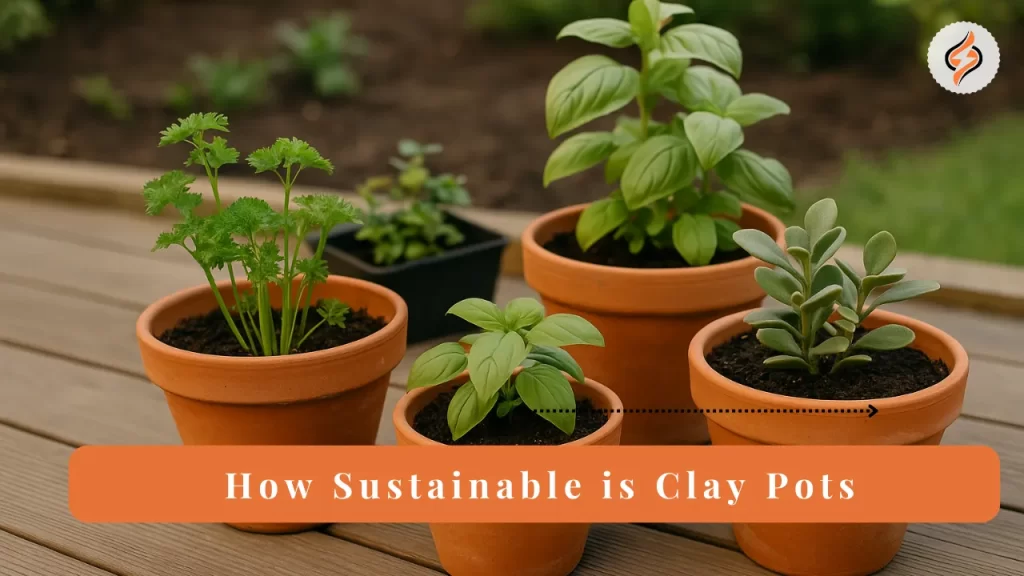
Clay plant pots have been a staple in gardens for centuries. They’re known for their natural appeal and plant-friendly features, but how sustainable is clay pots?
In this quick guide, we’ll explore the sustainability of clay pots used in gardening – from the natural materials they’re made of, through manufacturing, their use in your garden, to end-of-life disposal or reuse.
We’ll also compare clay pots with other containers (like plastic, ceramic, and metal) and weigh the pros and cons. By the end, you’ll have a clear verdict on whether clay pots are the eco-friendly plant pots you’ve been looking for.
(Side note: Clay pots are also used in cooking and water storage in some cultures. While those uses share some sustainability advantages (natural, chemical-free), our focus here will be on gardening applications.)
What Are Clay Pots Made Of?
Clay pots are made from natural clay soil. This material is abundant, non-toxic, and free from petroleum-based chemicals.
Clay is extracted from the earth, shaped into pots, and then fired at high temperatures in a kiln. This process transforms the raw clay into durable terracotta. The natural origin of clay makes it appealing for eco-conscious consumers.
However, while clay itself is a renewable resource, it’s important to note that large-scale clay extraction can disturb ecosystems. Ethical sourcing practices, such as using locally available clay or recycled clay materials, can reduce this impact.
Still, compared to plastic, clay remains a much more sustainable raw material.
Material Sourcing & Manufacturing
You May Also Read: Economic Impact of Sustainable Agriculture
#1 Natural materials:
Clay pots start as clay, a type of soil rich in minerals. This clay is dug from the earth (often from quarries or riverbeds) – a natural, abundant resource.
Using clay means we’re tapping into a natural material rather than synthetic plastic. There’s no petroleum involved in the raw material, which is a good start from a sustainability perspective. However, extracting large amounts of clay can still disturb land and ecosystems, so responsible sourcing matters.
#2 Kiln firing:
Once shaped, clay pots are hardened by firing in a kiln at very high temperatures (often around 1,000°C or more). This manufacturing step consumes significant energy (usually gas or electricity) and results in CO₂ emissions.
In fact, making a ceramic item can produce on the order of 1–2 kg of CO₂ per piece depending on the kiln efficiency.
The firing process is more energy-intensive than producing a plastic pot, which is usually molded at lower temperatures.
So, from a carbon footprint standpoint, clay pots have an upfront impact due to the kiln firing.
On the upside, modern kiln technology and practices can mitigate some of this impact (for example, firing large batches at once to maximize efficiency.
Also, unlike plastics, clay pots don’t involve toxic chemical synthesis – the only processing is firing the clay, with no petroleum-based ingredients. If renewable energy or efficient kilns are used, the production impact can be further reduced.
You May Also Read: Is Paper Biodegradable? A Complete Guide
Comparison – clay vs plastic production:
Producing a plastic pot generally uses petroleum (a fossil fuel) as the raw material.
Manufacturing plastic involves refining oil, creating polymers, and molding them into shape. This process can be less energy-intensive per unit than firing clay, but it has hidden environmental costs: drilling for oil, risk of spills, and greenhouse gas emissions from petrochemical plants. Plus, the plastic itself is made of non-renewable resources.
In contrast, clay is renewable in the sense of being naturally occurring (though it forms over geologic time) and often locally sourced. There’s a trade-off: clay pots use more energy to make, but avoid the fossil fuel feedstock that plastic requires.
To sum up the production phase: Clay pots have a higher immediate energy cost due to kiln firing, but they’re made of natural earth materials without direct fossil fuel inputs in the product. This sets the stage for evaluating their sustainability over their entire life cycle.
You May Also Read: How to Balance Cost and Sustainability in Coffee Packaging
Benefits of Clay Pots
Clay pots offer several environmental and practical advantages:
- Breathability: Clay is porous. Air and moisture pass through the walls, which helps prevent root rot and overwatering. This creates a healthier root environment.
- Plant Health: Many gardeners find that herbs, succulents, and houseplants thrive in clay due to the oxygenation it provides.
- Longevity: Clay pots can last for decades when handled with care. They don’t degrade like plastic and resist UV damage.
- Natural Aesthetic: Their earthy, rustic appearance suits natural garden styles. They also develop a patina over time, which adds character.
- No Microplastics: Unlike plastic pots, clay doesn’t break down into harmful particles. This keeps soil and water systems clean.
Drawbacks of Clay Pots
While clay pots are more sustainable than many alternatives, they have their challenges:
- High Energy Use: Kiln firing is energy-intensive, contributing to CO₂ emissions.
- Fragility: Clay pots can crack if dropped or exposed to freeze-thaw cycles. In colder climates, they should be moved indoors during winter.
- Heavy Weight: Especially when filled with soil, they can be hard to move. This might be inconvenient for balconies or renters.
- Water Loss: Because of their porosity, water evaporates faster. This means more frequent watering is required, particularly in hot or dry climates.
- Not Curbside Recyclable: Most municipal recycling programs don’t accept ceramics. However, they are inert in landfills and don’t release toxins.
Despite these drawbacks, the environmental impact is significantly lower than disposable plastic options when pots are reused over many years.
You May Also Read: Visual Comparison of Biodegradable Vs. Non-Biodegradable Biomaterials
End-of-Life: Disposal, Reuse, or Recycling
What happens when a clay pot finally breaks or is no longer wanted? Sustainability isn’t just about using a product – it’s about the end-of-life too.
Here clay pots have some clear advantages over plastic:
- Reusable: Even cracked pots can serve in gardens—as drainage layers in larger containers, decorative elements, or garden markers.
- Inert in Soil: Broken clay returns to the earth safely. It doesn’t leach chemicals or pollute the environment.
- No Microplastic Pollution: Clay pots don’t contribute to the global microplastic crisis.
For plastic pots, by comparison, end-of-life is far more problematic. While some plastics are technically recyclable, the vast majority of plastic plant pots do not get recycled.
Even when plastic does break down, it breaks into tiny fragments (microplastics) that pollute soil and waterways, posing ingestion risks to animals.
Clay, by contrast, just breaks into smaller clay bits – no microplastic, no toxins. This stark difference at end-of-life is one of the strongest arguments in favor of clay pots as environmentally safe gardening containers.
You May Also Read: 5 Items That Are Usually Recycled (And How to Do It Right)
Disposal of other materials:
A quick note on other pot materials:
#1 Glazed ceramic pots (fancy colorful planters) share the same fate as terracotta – they are not recyclable either (glazes can contain heavy metals), so they must be reused or landfilled.
#2 Metal planters, if they’re pure metal (like steel or aluminum), can be recycled as scrap metal pretty easily when they’re no longer usable.
#3 And wooden planters or biodegradable fiber pots can decompose (wood will rot over years; fiber or compostable planters made of coir, peat, or rice hull will break down much faster, within a season or two).
We’ll compare these alternatives more in the next section.
The bottom line here is: Clay pots don’t create persistent pollution at end-of-life, whereas plastic pots contribute significantly to our waste and pollution problems.
Reusing clay pieces is also easier and more eco-friendly than trying to deal with stacks of old plastic pots. Now, let’s stack up clay against other common container materials directly.
You May Also Read: Why Are Forests Important For Mitigating Climate Change?
Clay Pots vs. Other Materials: Which is Greener?
Choosing a planter isn’t just between clay and plastic. There are also glazed ceramics, metals, and new biodegradable options. Let’s compare them in terms of sustainability and usage:
| Material | Sustainability | Durability | Plant Health | Waste Impact |
| Clay | High | Medium | Excellent | Inert, reusable |
| Plastic | Low | Medium | Poor | Persistent, polluting |
| Ceramic (glazed) | Medium | High | Good | Not recyclable |
| Metal | Medium | High | Moderate | Recyclable |
| Biodegradable | High | Low | Good | Compostable |
The following section will compare clay with each material in detail;
#1 Clay vs. Plastic:
This is the classic matchup. In the debate of plastic vs clay pots, clay comes out ahead environmentally in most regards.
Plastic pots are lightweight, cheap, and don’t break easily – making them practical. But from an eco perspective, plastic is problematic: it’s made from non-renewable fossil fuels, and after use it often ends up as long-term waste.
Plastic’s main advantage for sustainability is that it can be made from or recycled into new products, in theory supporting a circular economy.
They persist for centuries, and even “biodegradable” plastics may only break down in industrial composters.
From a usage standpoint, plastic’s water-retaining nature can save on watering frequency, which might be seen as a small eco perk (less water usage) in arid regions.
But this must be weighed against the microplastic pollution and waste issues. Also, plastic production, while less energy-intensive per unit, contributes to carbon emissions and pollution during petrochemical processing.
Verdict (Clay vs Plastic):
Terracotta clay pots are generally far more sustainable than plastic pots for long-term gardening. They are made of natural materials and don’t create persistent waste.
Plastic pots might be suitable for short-term use or if made from recycled content, but if you’re aiming for eco-friendly plant pots, clay is the winner.
You May Also Read: Top 5 Best Biodegradable Golf Balls for Eco-Friendly Golfers
#2 Clay vs. Glazed Ceramic:
Unglazed terracotta and glazed ceramic are actually cousins – both are fired clay. The difference is that ceramic planters have a glaze (a glass-like coating). This makes them non-porous, more like plastic in how they hold water.
So a glazed ceramic pot will keep soil wet longer (good for some plants) but won’t have the breathability of terracotta.
In terms of sustainability, the glaze introduces chemicals (sometimes heavy metals like lead in old pots) and another firing at higher temperature.
But broadly, glazed ceramics share clay’s pros and cons: durable, inert, not recyclable. They do tend to be more expensive and carbon-intensive to produce (high-temperature firing and materials for glaze).
If you prefer the look of glazed pots, you still avoid plastic, but note that glazed pots won’t provide the same aeration to soil.
They are essentially like an elegant plastic pot in function, but heavier and longer-lasting.
Verdict: Sustainability is similar to terracotta, but without the watering downsides (and without the breathing benefits). Use them if needed; just be aware that broken ceramics also must be reused or landfilled.
#3 Clay vs. Metal:
Metal planters (think galvanized tubs, steel or aluminum pots) are another alternative.
Metals are derived from mined ores (steel from iron, etc.), which is resource-intensive to extract and produce (lots of energy and carbon emissions in smelting).
However, metals have a major sustainability advantage: recyclability.
A rusted or unwanted metal pot can be melted down and recycled indefinitely into new metal products with relatively high efficiency.
Many metal planters on the market are even made from recycled metal. They are extremely durable (steel or cast iron will last decades, though they might rust; aluminum won’t rust at all).
In use, metal containers don’t break and are usually thinner-walled, so they weigh less than clay (though still heavier than plastic). But thin metal has its own issue: it’s a conductor of heat and cold.
In sun, metal pots can get very hot, potentially scorching roots; in cold, they offer little insulation.
They also lack porosity, so they hold water like plastic. From an eco view: if you upcycle an old metal bucket as a planter, that’s great reuse. If buying new, look for recycled content.
Verdict:
Metal planters are sustainable in that they’re long-lasting and recyclable, but initial manufacturing has a high carbon footprint. They’re good for a stylish or long-term installation (and zero plastic waste), but watch out for overheating and the need for eventual recycling.
#4 Clay vs. Biodegradable Pots:
In recent years, truly biodegradable gardening containers have hit the market. These include compostable planters made from materials like coconut coir, wood fiber, peat, rice hulls, or even compressed cow manure!
The idea is that you can plant the seedling pot and all into the ground, and it will decompose, feeding the soil – leaving nothing to landfill. In theory, this is the ultimate sustainable solution (no waste at end-of-life).
How do these compare to clay? They’re great for short-term use, like nursery starter pots or transplanting pots. They are usually quite eco-friendly in production, often using agricultural waste (like coir fiber from coconut husks) and low-energy forming processes.
They also avoid fossil fuels entirely giving them a smaller carbon footprint and less resource use than plastic equivalents.
However, there are some catches. Many biodegradable pots lack durability – they can start breaking down or growing mold if used for too long before planting.
In commercial trials, some biodegradable pots softened or degraded during longer crop cycles, making them impractical for growers.
They also tend to dry out quickly (similar to clay, or even more so), which meant higher water use for plants grown in them. Some “compostable” plastics only break down in industrial compost facilities, not in a backyard, which can be misleading.
So, while biodegradable pots are very promising, they currently excel in niche uses – like seed starting or situations where you plant the whole pot in the ground. A large decorative patio pot made of pressed fiber isn’t common because it wouldn’t hold up for years.
Verdict: Biodegradable pots are excellent for reducing plastic waste and have a low environmental impact, but they are not direct replacements for sturdy long-term pots like terracotta.
Best Use Practices to Maximize Sustainability
Here’s how to make your clay pots even more sustainable:
- Buy second-hand: Salvage or thrifted pots reduce demand for new production.
- Use indoors during winter: Protect from frost cracking.
- Repair when possible: Use adhesives or fillers to mend minor cracks.
- Reuse creatively: Turn broken pots into art, edging, or pot fillers.
These habits stretch the life of each pot and cut down on waste.
You May Also Read: Top Picks: Best Farm Equipment to Purchase
Conclusion: How Sustainable is Clay Pots?
Yes—clay pots are a sustainable choice, especially for gardeners aiming to reduce plastic use. They are made from natural materials, support healthy plant growth, and can last a lifetime. While the initial carbon footprint from firing is a concern, it’s outweighed by their longevity and end-of-life safety.
If sustainability, aesthetics, and plant health matter to you, clay pots are a smart, eco-conscious option.
Have you used clay pots in your garden or home? What differences have you noticed? Share your thoughts below and help others grow greener.